Mitternacht
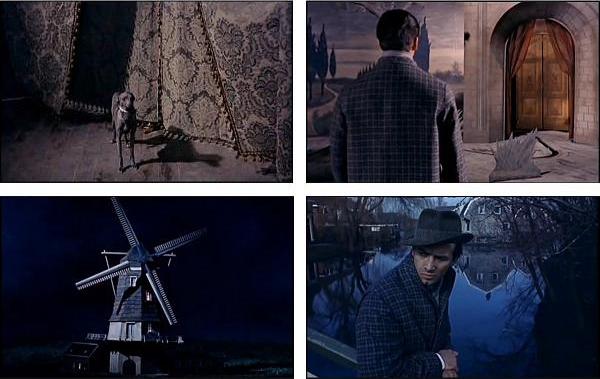
Pierre Brice in Il Mulino delle Donne di Pietra (1960 Giorgio Ferroni)
„Wenn die Schöpfungen kein ein für allemal erworbener Besitz sind, so nicht nur darum, weil sie wie alle Dinge vergänglich sind, sondern auch, weil sie fast ihr ganzes Leben noch vor sich haben.“ (Maurice Merleau-Ponty: Das Auge und der Geist, Juli-August 1960)
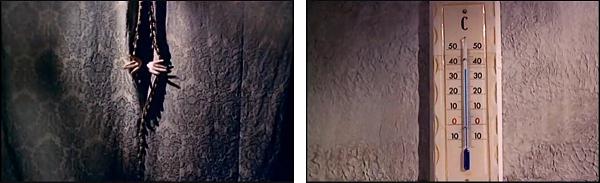
Die Mühle der versteinerten Frauen – so nennen die Dorfbewohner das windgetriebene Skulpturenkarussell, das irgendwo in Holland einen schönen Schauplatz abgibt für einen italienischen Horrorfilm, in dem die Unterscheidung zwischen Lebendigem und Totem, bildlich zugespitzt im Gegensatz von Blut und Stein, sich langsam aufweicht und verwischt – im Ächzen von Holz, in der staubigen Schwere langsam sich öffnender Vorhänge, im böse Geahnten – bis sich endlich vollends alles auflöst im wütenden Gelb und Rot von Technicolor.
Die Mühle der versteinerten Frauen hat einen erstaunlichen Grundriss; irgendwie wurde das Schreckenshaus des Dr. Rasanoff in das Kabinett des Professor Bondi hineingebaut. In dieser nervösen Architektur geht gegen die Natur ein harter Kampf vonstatten. Aus Liebe zu einer Frau wollen zwei Männer das Gleiche: den Aufschub des Verblassens; sie wollen Kunst. Kein Wunder, dass ein dritter, ein junger Kunststudent (Pierre Brice), sich abbringen lässt von seiner nüchternen Recherchetätigkeit und verwirrende Erkundungsgänge auf dem Gebiet des Gefühls unternimmt.
Kann es Zufall sein, dass vom situationistischen Manifest bis zur Premiere von Ferronis Film gerade mal ein Sommer verging? Anhand eines Londoner Stadtplans wurde zuvor der Harz durchquert, und jemand schlug vor, sämtliche Reiterstatuen aller Städte in einer öden Ebene zu einer synthetischen Kavallerieattacke zusammenzutragen. Man muss sich vorstellen, wie Pierre Brice dazwischen nachts umherstreift! „Zu bemerken ist jedoch, daß die letzten Nachtstunden für das Umherstreifen im allgemeinen ungünstig sind.“ (Guy Debord: Theorie des Umherstreifens)
Es ist der Normalfall, dass die international agierende Ferroni Brigade, wenn sie undotierte Filmpreise, goldene, silberne, graue oder tanzende Esel „for the Most Ferronian Film“ vergibt, dabei einen Geschmack an den Tag legt, der anderen hermetisch oder grillenhaft dünkt. Wer weiß mit Sicherheit zu sagen, ob die Ferronisten nun gerade in konspirativer Runde Cluedo spielen oder eine possierliche Liste von tausend Regiegöttern in die Rehlederhose Heideggers ritzen. Mir gefällt die muntere Brigade besonders dann, wenn sie das Naheliegende achtet und ergriffen schwärmt von Minnelli oder Bergman.
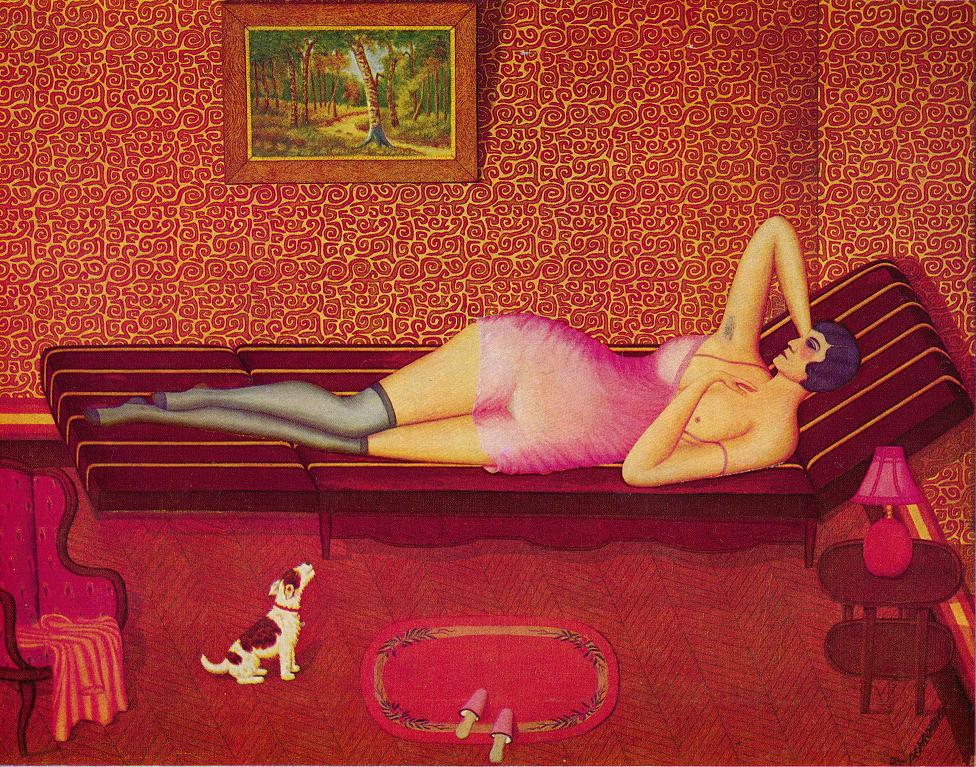
Liegende Frau, 50 x 61 cm, Musée National d‘ Art Moderne, Paris
„Der Typograph Dominique Peyronnet aus Talence bei Bordeaux war ein Dichter virtuoser Banalität. Er zeichnete die vereiste Landschaft seiner Wünsche, Seestücke, Waldausschnitte, Flussansichten und die albdruckhaft entkleideten Frauen.“
(Wegen solcher Sätze kaufe ich gerne etwas ältere Bücher über etwas ältere Kunst.)
„In völliger Isoliertheit sind alle Dinge mit messerscharfem Stift formuliert. Die bewegten Wellen seiner Meere sind in magischer Reglosigkeit, wie aus Glas geschliffen. Die Blätter und Farne des Waldes wie fein aufgefädelte Perlenschnüre aneinandergereiht. Mit derselben Präzision, mit der Peyronnet die Farbreproduktionen in der Druckerei bereitete, glaubte er die Natur und das menschliche Drama reproduzieren zu sollen. Nur etwa dreißig Bilder von ihm sind bekannt. Auf dem mit wirklichen Tapeten- und Parkettmustern beklebten Grund malt er die ‚Liegende Frau‘ auf dem dunkelroten Sofa im rosa Hemd und grauen Seidenstrümpfen.“
(Oto Bihalji-Merin: Die naive Malerei, DuMont Köln, 1959)
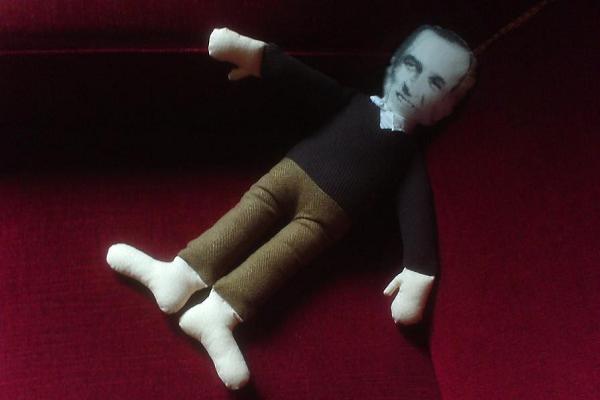
Ingmar Bergman, für Kinder, Handarbeit von Doris Dovecot.
„Give your kids an idol figure to sleep next to“
Achtung! Alice und Ellen Kessler werden im Oktober in Rom auf der Bühne stehen in einer Musicalversion von „Dr. Jekyll und Mr. Hyde“. Es stimmt. Im August las ich die Vorankündigung des Teatro Eliseo mit eigenen Augen. Es ist wahr.
Dann auf der Via Veneto, die sommerlich, sonntäglich, leer und verlassen dalag, sahen wir in einiger Entfernung etwas, was wir noch weniger glauben konnten. Kaum reichte die Zeit den Gedanken zu fassen, dass der Erspähte so seltsam leicht zu erkennen war an seiner weltbekannten Art sich zu tarnen, da gerieten wir schon unversehens zwischen Paparazzi, von denen einer in altbewährter Manier seine Arbeit tat: „Woody!“ Und tatsächlich hob Woody Allen den Blick, sah zu uns hin! Und es sollte hier festgehalten werden, dass er dabei, plötzlich so jung wie die Kessler-Zwillinge, ein Gesicht machte, das alle auf der Straße zum Lachen brachte. Fabelhaft, kurz zuvor Midnight in Paris gesehen zu haben und gleich nach der Rückkehr aus Rom noch ein zweites Mal, wobei jeweils geschah, was mir in den 80er Jahren selbstverständlich wurde und worauf ich in all seinen Filmen der vergangenen zwei Jahrzehnte geduldig hoffte: es ließ der Widerschein der Leinwand meine Seele glänzen wie eine Rüstung.